

Claude Code Pricing, features & alternatives
Anthropic's agentic coding tool that reads, edits and runs code from your terminal, IDE, desktop or web
Claude Code is Anthropic's agentic coding tool. According to its official documentation, it reads your codebase, edits files and runs commands from the terminal, VS Code, JetBrains IDEs, a desktop app or the web. Teams can adapt it with CLAUDE.md project rules, MCP servers, skills and hooks. Access requires a paid Claude plan, starting with Pro at $20 monthly or $200 paid upfront for a year, or Console API billing. It is not included in the Free plan. Team and Enterprise organizations can add managed Code Review on GitHub. It is billed separately, posts findings and does not approve or block merges.
Editorial assessment ·
Is Claude Code right for your development work?
Claude Code is a configurable coding agent that reads your repository, edits files and runs commands. CLAUDE.md, hooks, skills and MCP give you control at the project level. As of October 18, 2026, our editorial preference is Codex with GPT-6 Astra. This is a dated recommendation, not a controlled benchmark. Claude Code is still worth evaluating on your own repository, and this view should be revisited after major releases.
- Access (Oct 18, 2026)
- Pro $20 monthly or $200 upfront yearly, Max from $100 (5x or 20x Pro usage), or Console API billing; not on Free
- Surfaces
- Terminal, VS Code, JetBrains IDEs, desktop app, web
- Managed Code Review
- Team and Enterprise on GitHub; inline findings, no approve or block; vendor average $15–25 per review
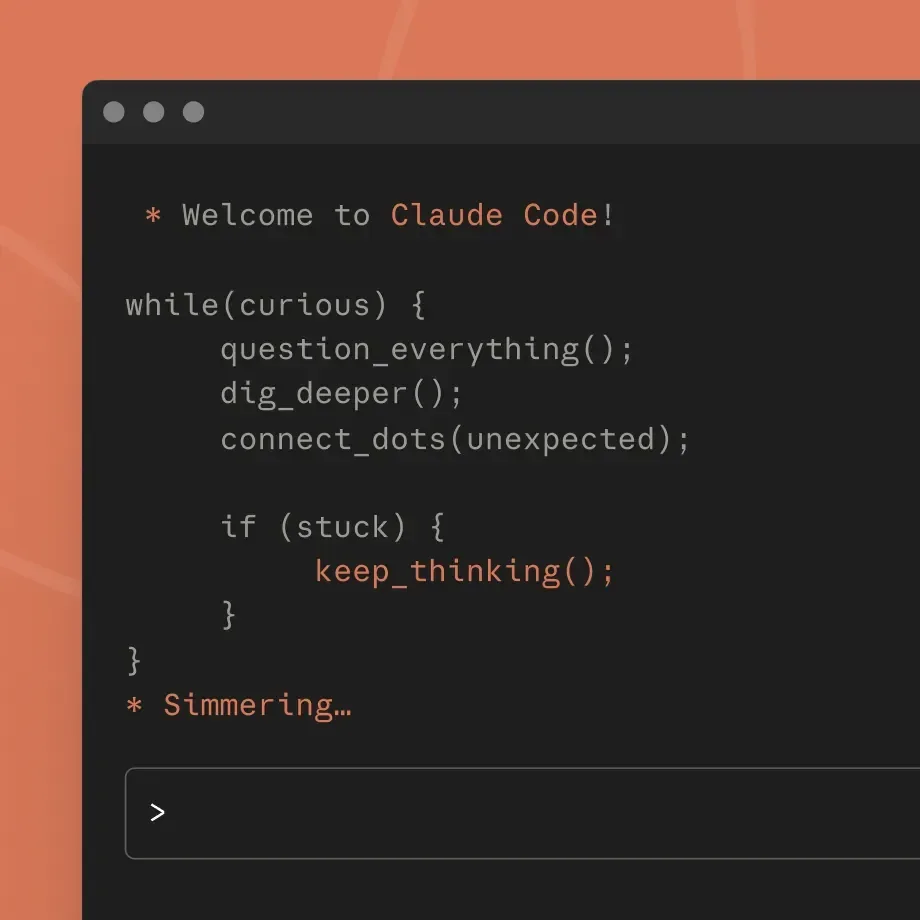
Official illustration of Claude Code’s terminal interface.
Source: Anthropic · official product page. Provider demonstration; interface and available features may vary.
Access, pricing and usage limits
Claude Code is not included in the Free plan. On Claude's pricing page, checked October 18, 2026, Pro costs $20 billed monthly or $200 paid upfront for a year, which is displayed as about $17 per month. Max starts at $100 per month and gives 5x or 20x Pro usage. That means more headroom, not unlimited use. Confirm prices and taxes at checkout.
Pro and Max limits are shared between Claude and Claude Code, including use in your IDE. Anthropic's support article describes a five-hour session window plus a weekly limit. The model you choose and the complexity of each task affect how quickly you use them up, and long sessions or parallel work raise consumption. When you reach a limit, you can wait for the reset, upgrade, or buy optional usage credits.
API billing is separate. If ANTHROPIC_API_KEY is set in your environment, it takes precedence over your subscription and usage is charged to the API. Check which authentication is active without displaying the key's value, and use /login to switch accounts. Monthly API credits tied to a Max plan cannot be used in Claude Code, and they are distinct from Console credits you purchase. Run /usage for plan bars and attribution. Its session dollar estimate applies to API usage, not to your subscription bill, and the Console is the authoritative record of API charges.
A practical workflow with output validation
A simple three-step routine keeps sessions under control. First, scope the task: write a CLAUDE.md file with build commands, test commands and conventions, then describe one change with a clear definition of done. Second, ask for a plan before any edits and correct it early. Third, review the diff yourself and rerun the tests independently in a clean checkout instead of relying on the agent's summary.
Choose permissions deliberately before letting it run commands, and keep its scope to the project. Limit MCP servers to what each task needs, keep secrets out of the files and environments it can read, and follow any admin policy your organization sets. Hooks can run checks such as linting around its actions. In local sessions the tools run on your machine, but that does not make model inference offline.
Data use depends on your plan. On consumer Pro and Max accounts, the model improvement setting controls whether your data can be used for training. Data from commercial plans such as Team, Enterprise and the API is not used for training by default unless the organization opts in. Check which plan and settings apply before opening a confidential repository. This guide makes no privacy or compliance guarantee.
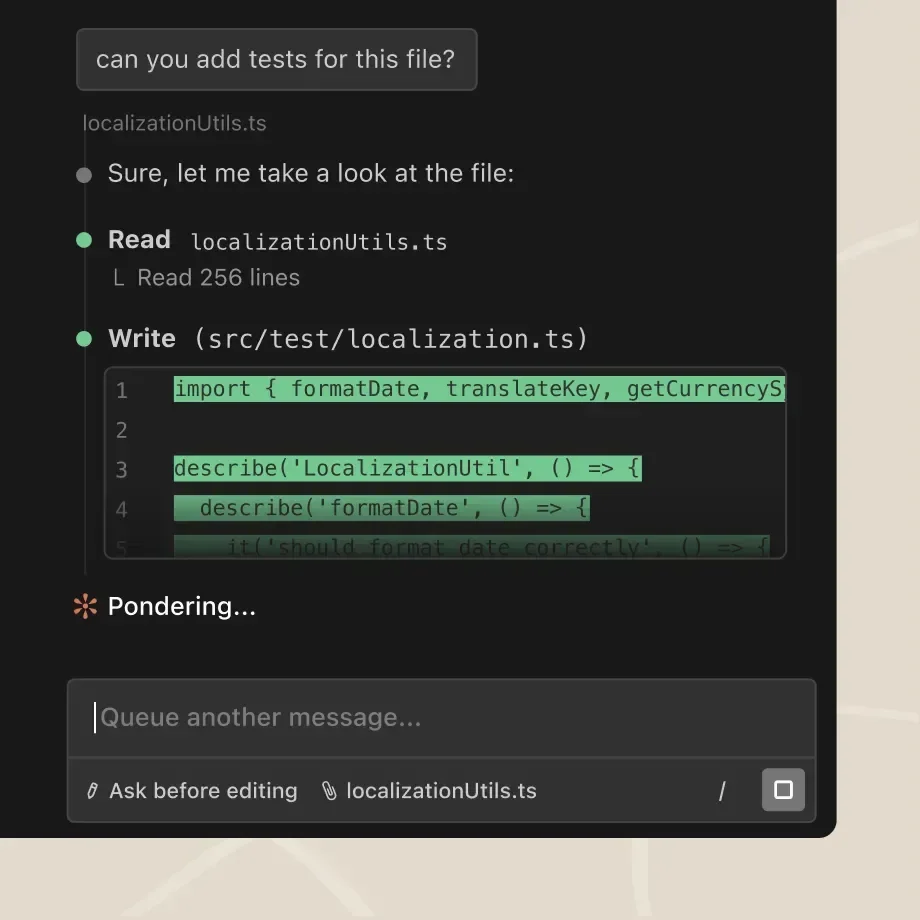
Claude Code in VS Code: an example request to add tests to a file.
Source: Anthropic · official product page. Provider demonstration; interface and available features may vary.
Local review versus managed Code Review
Asking Claude Code to review a diff in your own session is different from using Anthropic's managed Code Review. The managed service is available to Team and Enterprise organizations on GitHub, but not to organizations with zero data retention. It posts findings inline on pull requests and does not approve or block merges. Review rules can live in CLAUDE.md and in a REVIEW.md file.
Managed reviews are billed separately, based on tokens, through usage credits. Anthropic cites an average of $15–25 per review. That is a vendor average, not a quote. If reviews trigger on every push, costs multiply with each update. A manual @claude review comment also opts that pull request into push-triggered reviews afterward, so set a budget cap in the settings.
Enable it selectively. Start with one or two active repositories, watch spend for a few weeks, and expand only if the findings prove useful. Treat findings as leads, not proof: a pull request with zero findings has not been shown to be secure or correct. Keep CI tests, branch protection and human reviewers as your merge gates.
Claude Code versus Codex in October 2026
As of October 18, 2026, our editorial preference is Codex with GPT-6 Astra. This is a dated recommendation, not the result of a controlled benchmark, and AI Hunter has not run head-to-head tests for this guide. Claude Code is still worth evaluating, especially if your team already relies on CLAUDE.md, hooks, skills or MCP integrations across terminals and IDEs.
Make the decision on your own repository. The protocol below is a suggested method, not a completed test: run the same scoped tasks in each agent, then compare task completion, corrections, independently rerun tests, latency and actual spend. Models and limits change often, so revisit the comparison after major releases from either vendor.
Evaluate it on your own work
- Proposed protocol, not a completed test: pick three to five closed issues with known fixes from your repository, and give the same brief to Claude Code and to each agent you are comparing.
- Record whether each task was completed, how many follow-up corrections it needed, and whether the full test suite passes when you rerun it yourself in a clean checkout.
- Log latency per task along with the model, permissions, MCP servers and CLAUDE.md used, so that configuration differences do not skew the result.
- After a week, compare spend and usage-limit interruptions per completed task, using /usage for plan bars and the Console for any API bill.
This is a proposed evaluation protocol, not a controlled benchmark conducted by AI Hunter. Model versions, plans and limits can change within weeks.
Official sources checked for this update
- Claude pricing
- Using Claude Code with your Pro or Max plan
- Claude Code: manage costs
- Claude Code overview
- Claude Code: data usage
- Set up Code Review for Claude Code
Prices are in USD unless stated otherwise. Confirm availability, billing terms and usage limits with the provider before subscribing.
Features of Claude Code
Pros and Cons
Pros
- Works in the terminal, VS Code, JetBrains IDEs, the desktop app and the web
- CLAUDE.md, skills, hooks and MCP make its behavior configurable per project
- The /usage command shows plan usage bars and attribution to help track consumption
- Managed Code Review on GitHub is available for Team and Enterprise, with budget controls
Cons
- Not available on the Free plan; it requires a paid plan or Console API billing
- Pro and Max limits are shared with Claude chat and follow five-hour and weekly windows
- A set ANTHROPIC_API_KEY takes precedence over the subscription and moves usage to separate API billing
- Managed Code Review costs extra and only posts findings, so CI and human review remain necessary
Use Cases
Streamline business travel and rides for your team, one platform, transparent pricing, full control.
Ready to try Claude Code ?
Anthropic's agentic coding tool that reads, edits and runs code from your terminal, IDE, desktop or web
Try nowAlternatives to Claude Code
Guides featuring Claude Code
- Best AI Coding Assistants in 2026: Cursor vs Claude Code vs GitHub Copilot vs Windsurf
Cursor, Claude Code, GitHub Copilot, Windsurf and Tabnine compared: the best AI coding assistants in 2026 covering autocomplete, agentic editing, terminal-native and self-hosted.
- Best AI Agents in 2026: OpenClaw vs Claude Code vs Lindy vs Relevance AI
OpenClaw, Claude Code, Lindy and Relevance AI compared: the best AI agents in 2026 for autonomous task execution. Open source, terminal-native and no-code options.
- Cursor vs Windsurf vs Claude Code: Best AI Code Editor in 2026
Comparing the best AI coding tools in 2026: Cursor, Windsurf, Claude Code, GitHub Copilot and Replit. Which one actually makes you faster?
- ChatGPT vs Claude: The Complete Guide (2026)
ChatGPT or Claude? In-depth comparison of the two best AI assistants in 2026: performance, pricing, features and use cases.