
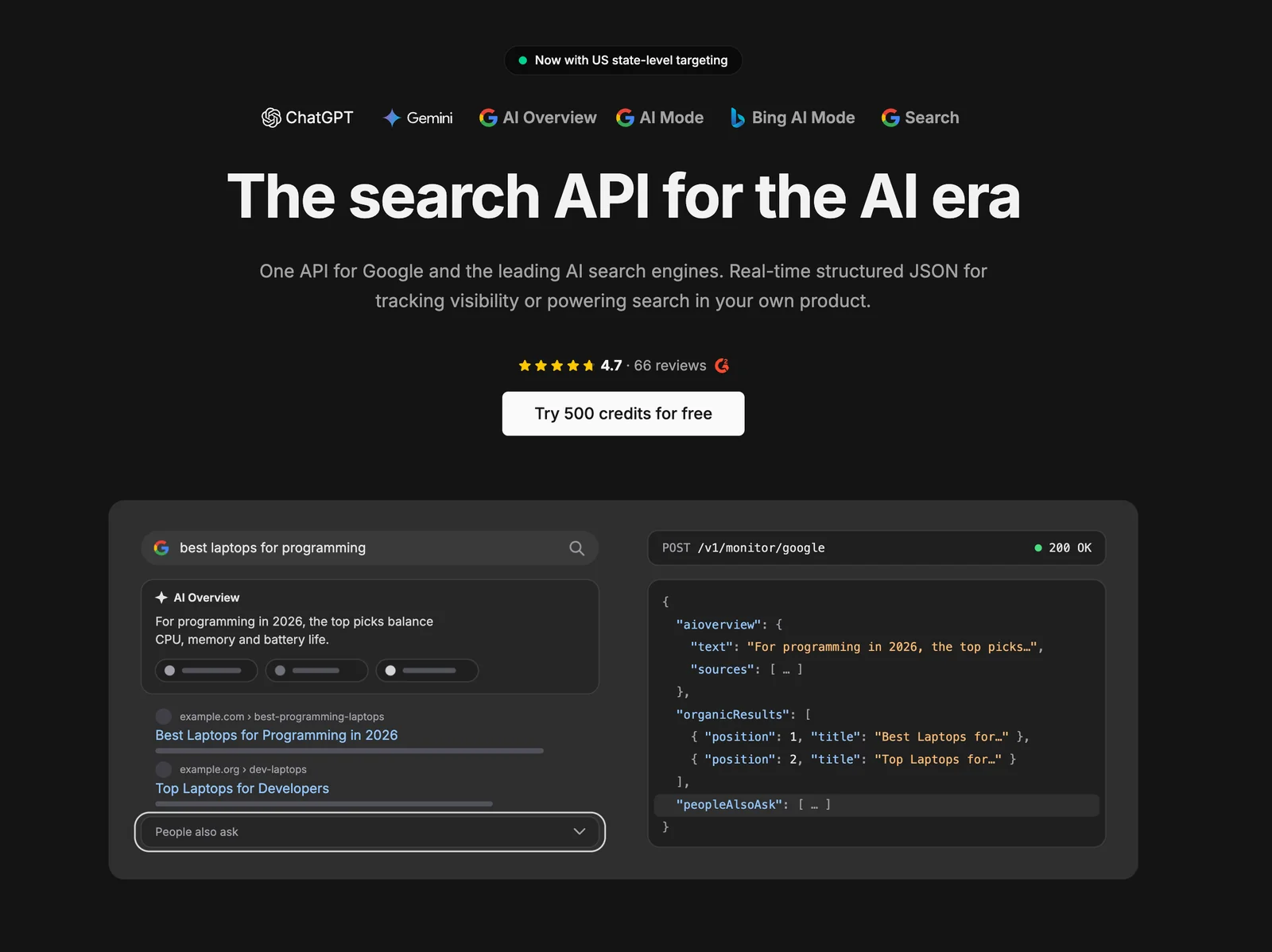
You know your Google rankings. But when a buyer asks ChatGPT for advice, is your brand among the recommendations? If a competitor appears instead, which pages are being cited? A few manual checks give you a snapshot. Tracking several questions over time calls for regular collection.
The cloro API collects AI answers and returns them as structured JSON, including their sources and citations. You choose the questions and collect answers to feed your own tools. In the workflow below, your team schedules collection, stores the history and builds the reports.
Imagine an SEO agency working for a CRM vendor that targets US small businesses. Its goal: find out when AI answers recommend the CRM, which competitors appear alongside it and which pages get cited.
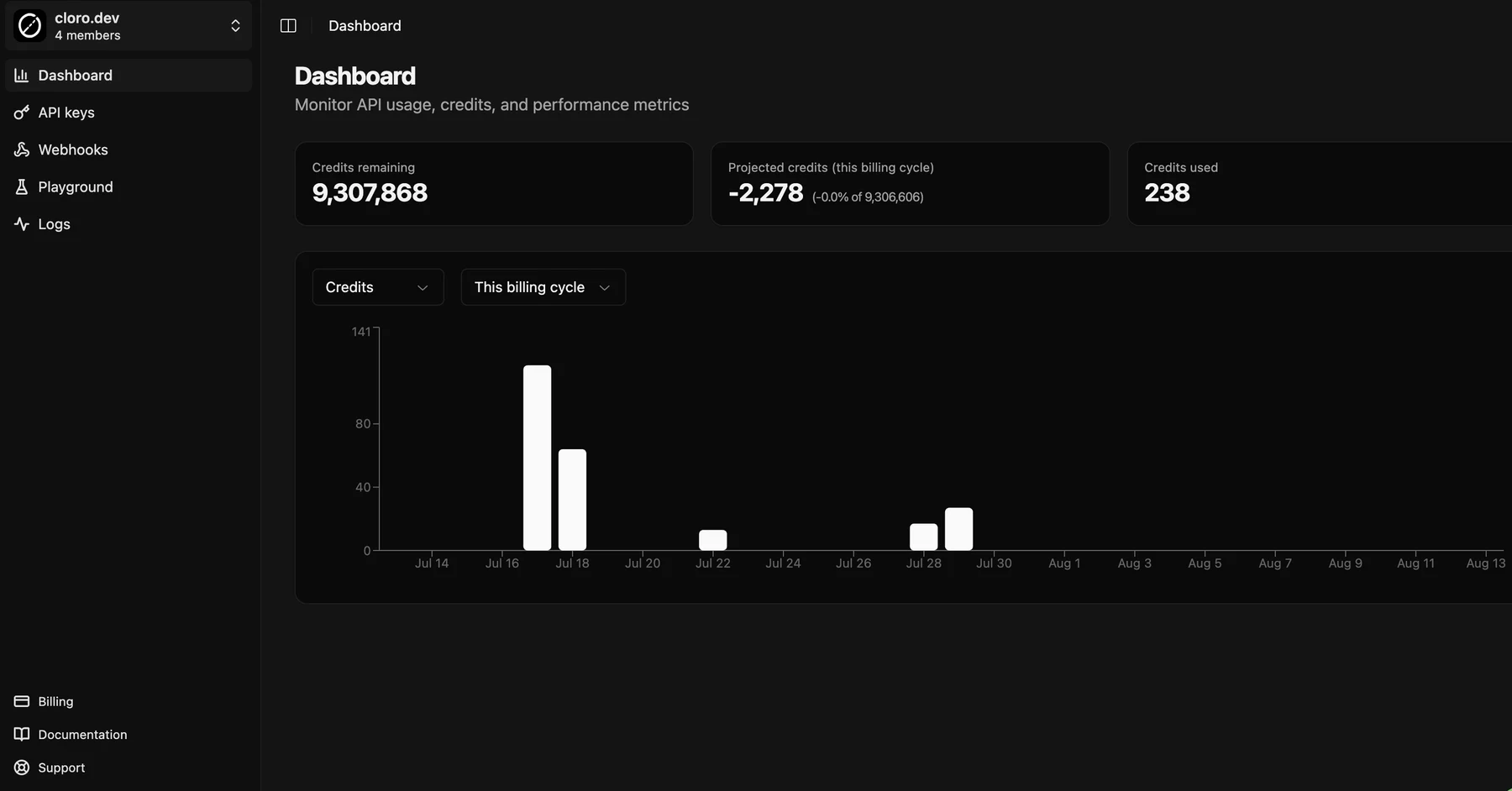
Four problems cloro helps with
You track SEO, but your presence in AI answers is unknown
The CRM vendor ranks reasonably well on several Google queries. Yet its founder asks the agency a simple question: when an accounting firm asks ChatGPT which CRM to pick, do we show up? Nobody can answer with more than a hunch.
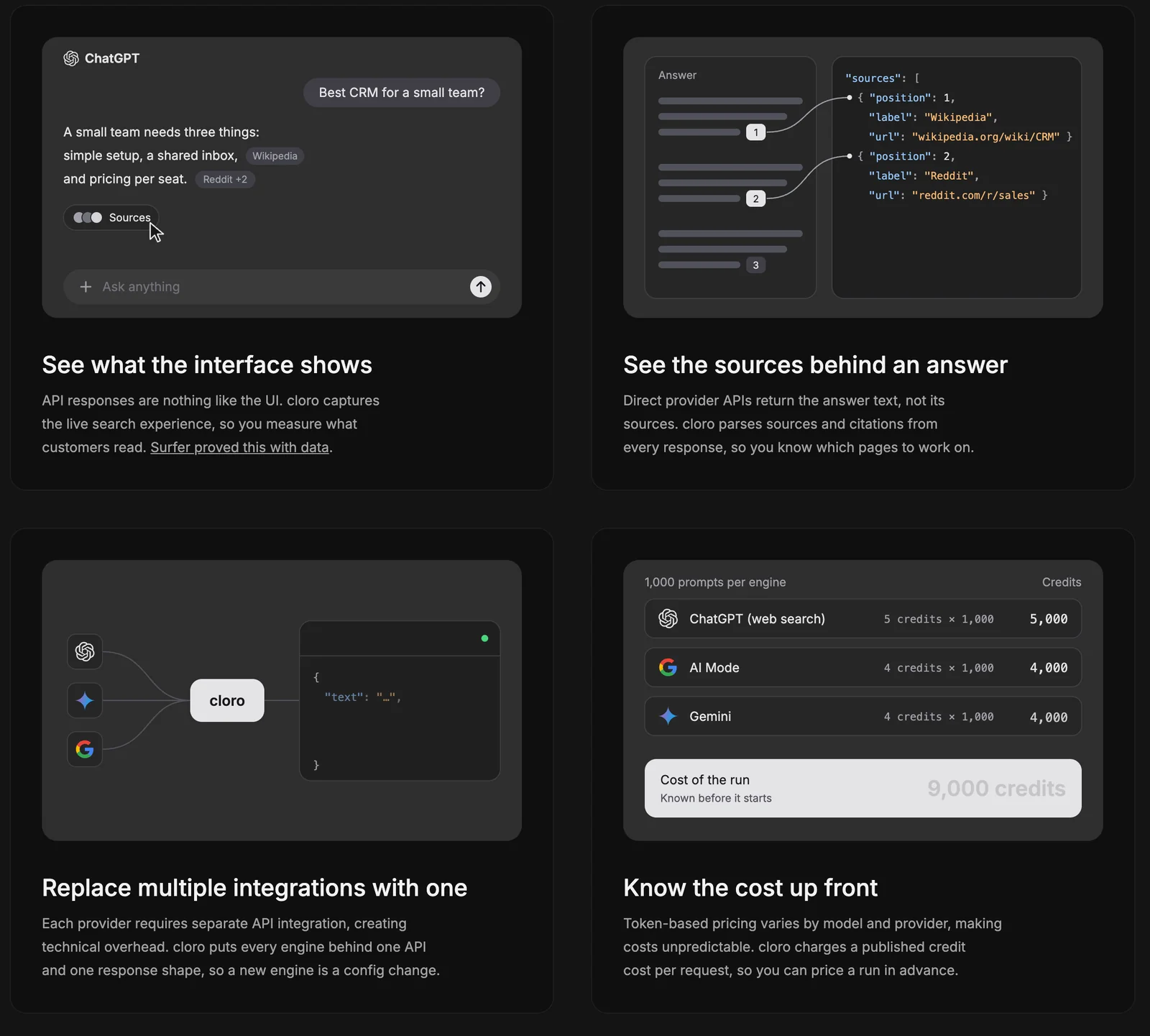
cloro sends buyer questions to ChatGPT, Gemini or Google AI Mode and returns each answer with its sources in a usable format. The agency can then count, on a fixed set of questions, how many answers name its client’s CRM.
Pick the questions that matter to the client, phrased the way a buyer would ask, without the brand name. That choice, more than the tool, decides how useful the tracking will be.
Manual checks become difficult to maintain
Until now, a consultant at the agency opened ChatGPT every Monday, asked a few questions and pasted the answers into a spreadsheet. The wording drifted from week to week, sources were not always recorded, and her logged-in session could affect the result.
With cloro, the agency can send the same questions through the API with fixed parameters and retain the structured answers. Answers can still vary between runs. Async mode lets you submit requests in batches. cloro does not schedule anything, though: the daily job, retries and storage are the agency’s to set up.
Confirm that someone on the team can maintain a scheduled job and a table of observations. If not, a product with a built-in tracking dashboard is probably a better fit.
Affiliate disclosure: AI Hunter may earn a commission if you subscribe to a paid plan through links in this article.
The free plan is enough for the first trial described below. You can open a free cloro account, with no card required, and test five questions before paying anything.
Competitors are cited, but you do not know which pages to review
Suppose that for the question about a 10-person accounting firm, answers regularly cite a competitor’s comparison page. Without sources, the agency would only know the competitor gets named. With them, it knows which URL to open.
The agency opens the competitor’s page and compares it with the client’s matching page. Say it notices two gaps: the competitor shows public pricing and documents its QuickBooks integration, while the client’s page points to a quote form and mentions the integration in a single line.
Treat this as a working hypothesis, not an explanation. cloro shows what gets cited; it does not tell you why an engine recommends one page over another. The agency can choose to improve one page, for instance by publishing a pricing table and factual integration documentation, and log the date of the change.
You need to show the client how visibility changes
A screenshot shows one answer on one day. It cannot show whether anything is changing. For the CRM client, the agency needs numbers it can recalculate and explain.
The agency can timestamp and store the observations collected with cloro, then compare them. Three measures are enough to start:
- Mention rate: successful answers that name the brand (or a validated alias), out of all successful answers.
- Domain citation rate: successful answers that link to the client’s site, divided by all successful answers, counting each answer once.
- Coverage: successful answers out of attempts, reported separately.
For example, 18 mentions across 60 successful answers is a 30% mention rate, and 6 answers citing the domain out of 60 is a 10% citation rate. A successful answer that cites nobody still counts in the total; an API failure only counts in coverage. Track traffic and conversions separately in your analytics.
After the page change, rerun the same questions on the same engines and market, then compare. Look for a pattern across repeated runs: a single change in an answer is not enough to establish a trend.
Getting started: five questions, three engines, two days
Start with five questions a potential customer would ask. For the CRM client, these could be:
- What is the best CRM for a 10-person accounting firm?
- Affordable CRM for a home services company with field technicians
- Which CRM works well with QuickBooks and Gmail for a small team?
- Simple CRM for a solo real estate agent who needs follow-up reminders
- Which CRM helps a small business track quotes and email follow-ups?
Questions that include the brand name, such as asking what an engine knows about a given CRM, are useful for diagnosis but should be tracked separately. Mixing them in inflates the mention rate, since the brand is already in the question.
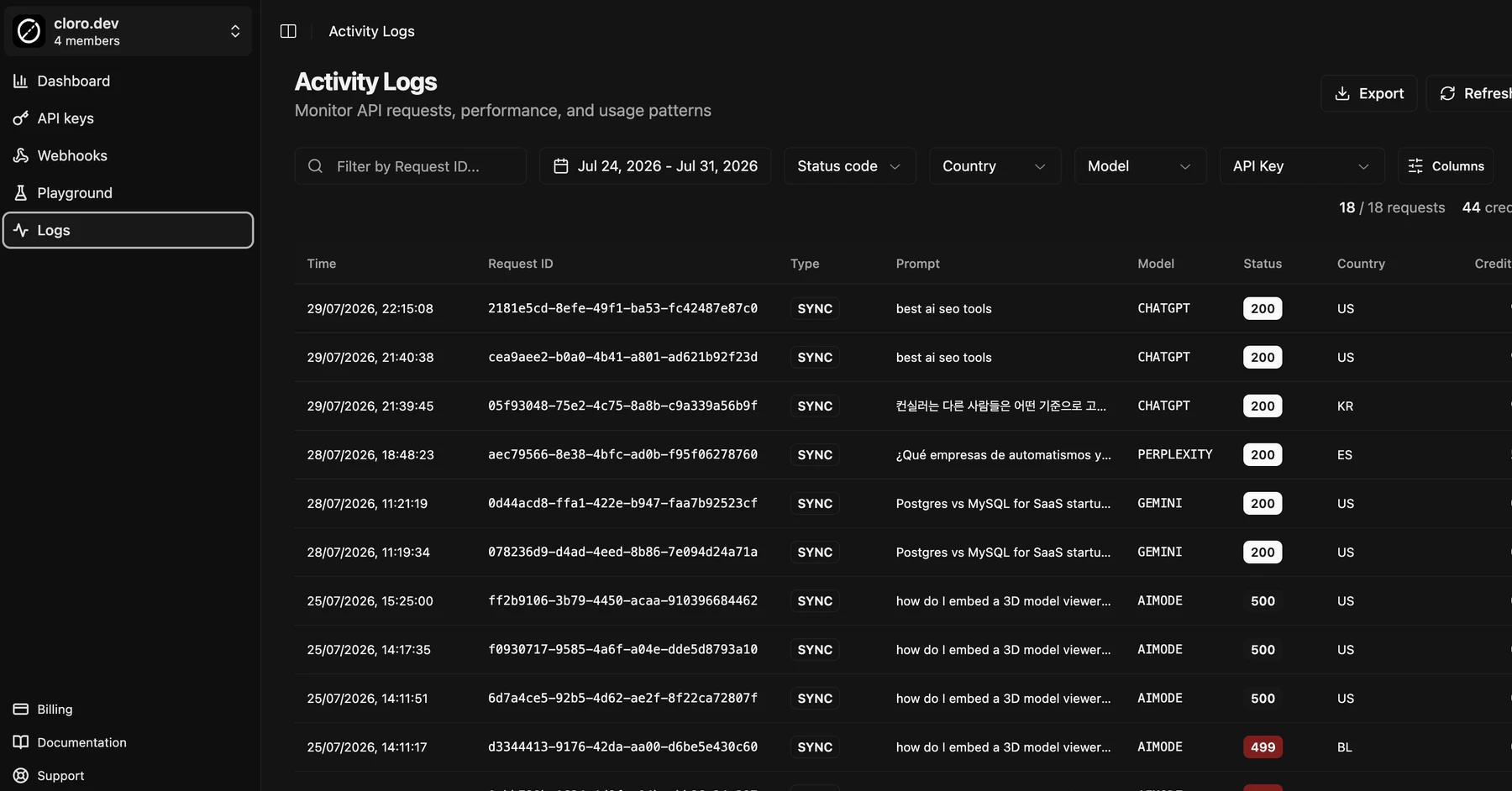
Five questions on ChatGPT, Gemini and Google AI Mode over two days give 30 answers. Use this first batch to check that you can extract brand mentions and cited URLs before scheduling a longer run. For each observation, store the raw answer, a UTC timestamp, the engine, the question text, the market, the sources, the status and the credits charged. Then ask a few of the same questions yourself while logged out: differences are normal, as AI answers vary between runs.
What cloro covers, and the limits to know
The providers guide explains that cloro queries engines through logged-out browser sessions, not through the models’ own APIs. You get sampled anonymous answers, not every user’s personalized experience.
| Engine | Status | Credits (async / sync) |
|---|---|---|
| ChatGPT | Supported | 5 / 7 |
| Gemini | Supported | 4 / 6 |
| Google AI Mode | Supported | 4 / 6 |
| Perplexity, Bing AI Mode | Supported | see the guide |
| Google Search (optional AI Overview), Google News | Supported | see the guide |
| Claude | Not monitored | |
| Grok, Copilot | Discontinued |
Bing AI Mode is a separate provider from Copilot, which is discontinued. The country parameter sets proxy geography, not the answer language, so write your questions in the target market’s language. Country availability is not guaranteed for every provider: check each one before planning a market.
Bring SEO and AI search data into your tools
Its SERP API returns Google organic results, sponsored ads, People Also Ask, related searches and an optional AI Overview with cited sources: useful for putting rankings next to AI mentions in your reports. The web search API delivers ranked results, URLs and snippets as JSON, so an assistant or agent can answer from current web sources.
Budget: from pilot to monthly tracking
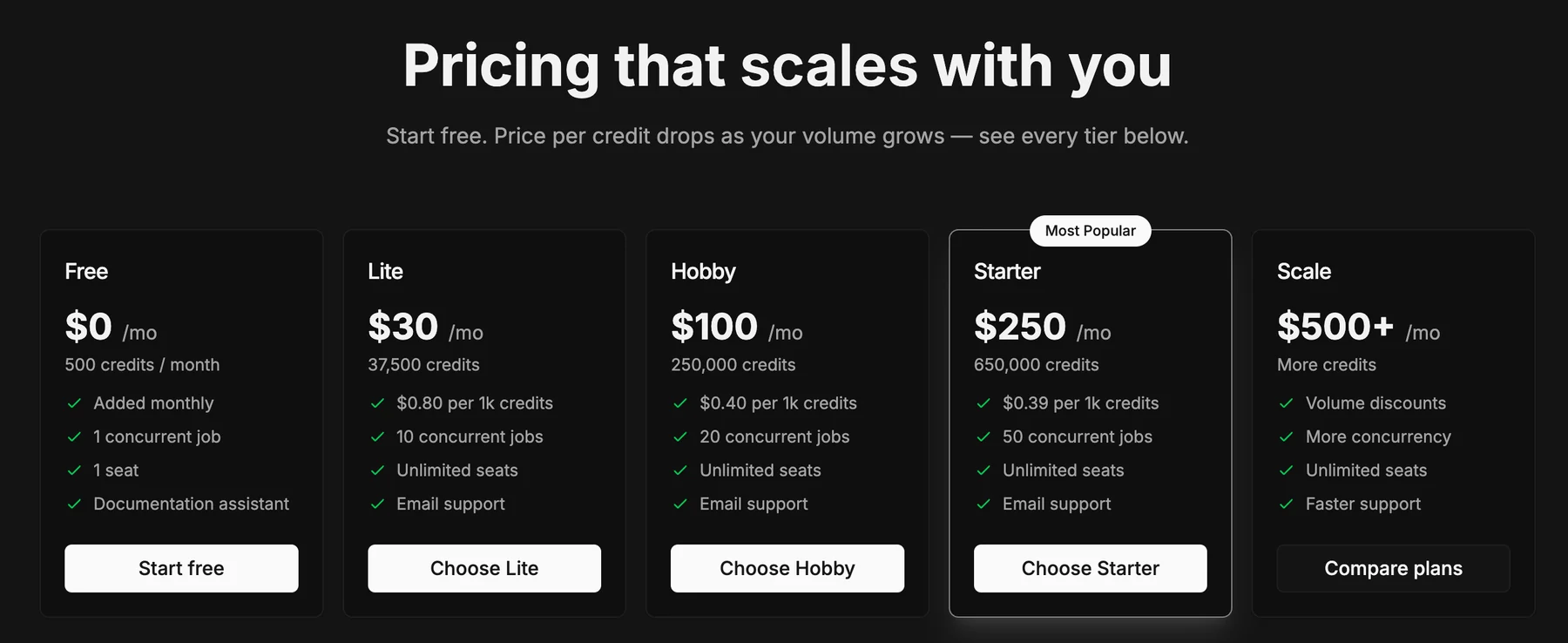
cloro’s pricing page, checked on 8 November 2026, lists among its monthly plans, in US dollars: Free at $0 for 500 credits, Lite at $30 for 37,500 credits, Hobby at $100 for 250,000 credits and Starter at $250 for 650,000 credits. There is no pay-as-you-go option.
The billing guide sets the rules that matter. The free plan needs no card and allows one concurrent request. Only successful results are charged, but a successful answer with no sources is still charged. If you resubmit a request yourself, the new successful result is charged again; internal failed attempts by cloro are not. Unused credits expire each month, and under the standard cap, service stops when they run out.
| Scenario (1 market unless stated) | Answers | Async credits | Sync credits | Plan that fits |
|---|---|---|---|---|
| Pilot: 5 questions, 3 engines, 2 days | 30 | 130 | 190 | Free ($0) |
| Tracking: 20 questions, 3 engines, 30 days | 1,800 | 7,800 | 11,400 | Lite ($30/month) |
| Same tracking in 5 country and language sets | 9,000 | 39,000 | 57,000 | Hobby ($100/month) |
To check the arithmetic: one question across the three engines costs 5 + 4 + 4 = 13 async credits, or 19 sync credits. Monthly tracking uses 20 × 30 × 13 = 7,800 credits, or 11,400 in sync mode. Each scenario assumes one run per day, per engine, per question. Plan choices are based on credit allowance.
Lite costs $30 even if you use only part of the credits. Budget separately for add-ons (such as ChatGPT’s full bundle, 2 extra credits), repeat runs, taxes, storage, automation fees and setup time.
If the pilot data looks usable, you can move up to the Lite plan for daily tracking in one market.
Integration: async, n8n or MCP
Async for regular collection. The async guide describes submitting a task, receiving a taskId, then polling or receiving a webhook, with batches of up to 500. It avoids the 2-credit surcharge on equivalent sync calls.
n8n for workflow automation. The n8n integration is a community node, n8n-nodes-cloro, so your instance must allow community nodes. Its Monitor operation uses sync pricing, meaning 2 extra credits per call.
MCP for ad hoc checks. The MCP integration lets clients such as Claude or Cursor call cloro, also at sync pricing. Using Claude as the client does not make Claude a monitored engine: it stays outside the tracked providers.
If you write code, the quickstart shows the first request. The Playground can also run one without a separate API key, using your organization’s credits.
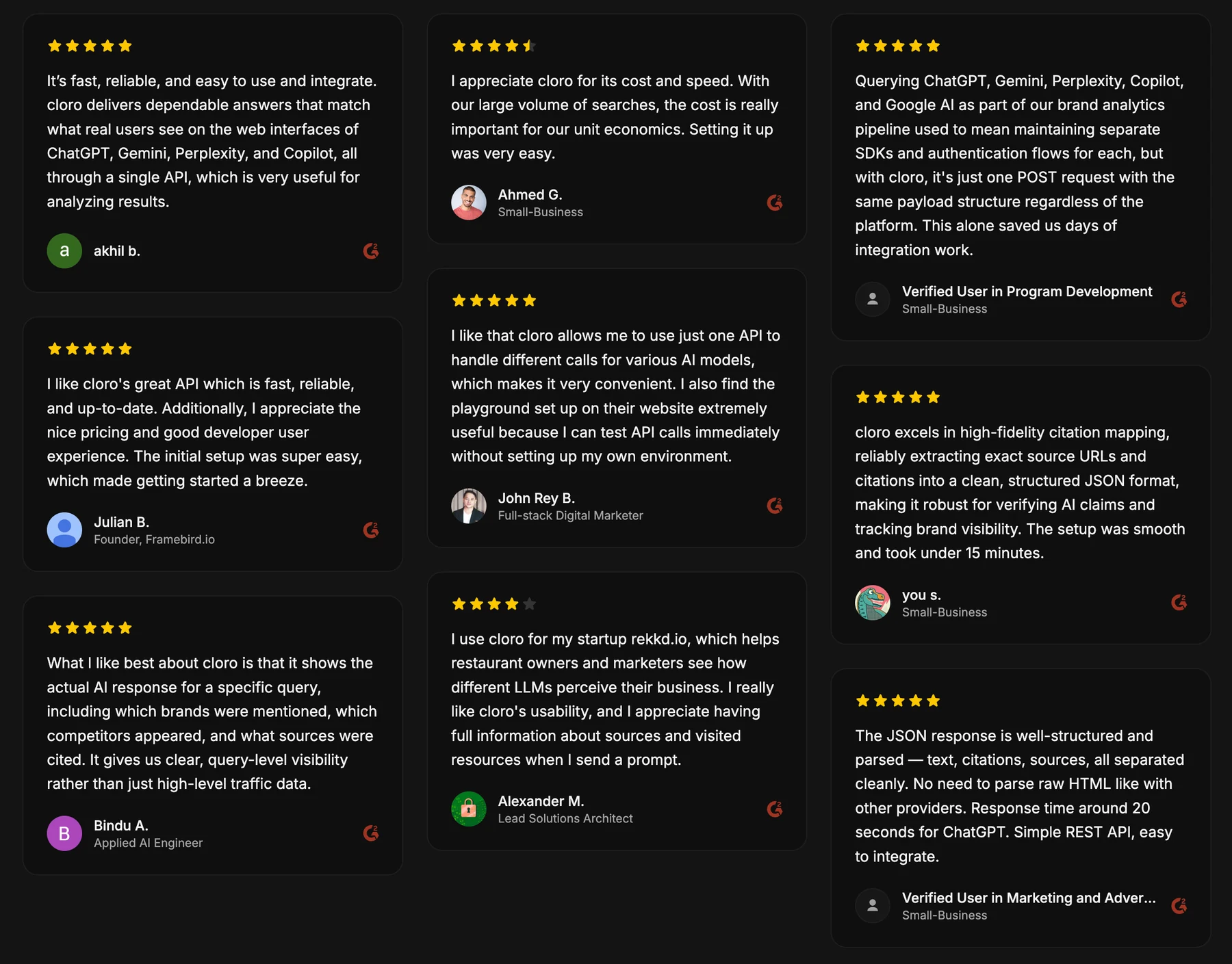
cloro user reviews
Who cloro suits, and where to start
cloro suits SEO agencies and marketing teams that want to choose their questions, keep the raw answers and build reporting they can explain, provided someone can script, store and chart the data. If nobody will maintain a scheduled job, a product with a tracking dashboard is likely a better use of time: check its custom questions, exports and methodology. For a broader comparison, see our overview of AI visibility tracking tools.
For a first trial, use the proposed agency workflow: five buyer questions, three engines, two days, then a careful read of the answers and sources. Expand only if that data helps you decide which page to improve. The pilot fits in the free credits, so you can create your free cloro account and see whether the data fits the way you work.
Frequently asked questions about cloro
Do I need to code to use cloro, or is there a ready-made dashboard?
cloro is an API that returns answers as structured JSON. It does not schedule anything: the daily job, retries, storage and reporting are yours to set up. The Playground can run a request without a separate API key, but if nobody on the team can maintain a scheduled job, a product with a built-in tracking dashboard is probably a better fit.
What does the free plan actually let me do?
The Free plan gives 500 credits per month, with no card required and one concurrent request. It covers the proposed pilot: five questions on ChatGPT, Gemini and Google AI Mode over two days, which means 30 answers and 130 async credits, or 190 in sync mode. Unused credits expire each month, and service stops once the allowance runs out.
Do API results match what a logged-in customer sees in ChatGPT?
Not necessarily. cloro queries engines through logged-out browser sessions, not through the models’ own APIs. You get sampled anonymous answers, not every user’s personalized experience. Answers also vary between runs, so ask a few of the same questions yourself while logged out and expect some differences. Investigate discrepancies before drawing conclusions.
Does a brand named without a link count as a citation?
No, it counts as a mention. The mention rate divides successful answers that name the brand by all successful answers. The domain citation rate only counts answers that link to the client’s site, each counted once. A mention does not automatically lead to a citation, and neither measure tells you anything about traffic or conversions.
Why are n8n and MCP billed differently from async requests?
The n8n node’s Monitor operation and the MCP integration both use sync pricing, which adds 2 credits per call. One question across ChatGPT, Gemini and Google AI Mode then costs 19 credits instead of 13: the pilot rises from 130 to 190 credits, and 20 questions tracked over 30 days from 7,800 to 11,400, still within the 37,500 credits of Lite at $30.
Answer sources: providers and collection method, billing, n8n and MCP.
Keep building your search strategy
Compare tools for your next step.

Best AI SEO Tools 2026: Surfer, Frase, Jasper and OmniSEO Compared
Compare Surfer SEO, Frase, Jasper and OmniSEO in 2026: what each does, verified monthly and annual prices, limits, and how to test value before you commit.
Read the guide
Best AI Tools for Content Creators in 2026: Castmagic vs Descript vs ElevenLabs vs Argil
Castmagic, Descript, ElevenLabs, Argil and Jasper compared: the best AI tools for content creators in 2026 covering podcast, video, voice, writing and shorts.
Read the guide
Best AI Marketing Automation Platforms in 2026
ActiveCampaign vs Brevo vs GetResponse: comparing the best AI marketing automation platforms in 2026. Features, pricing and recommendations for B2B and B2C.
Read the guideTools in this guide
Find the best AI tool
215 tools listed with features and pricing. Find the one that fits your needs.