
AI visibility tools send a fixed set of prompts to answer engines such as ChatGPT, Perplexity or Google AI Overviews. They then record whether your brand is named, which sources are cited and how competitors appear. The mention rates from this tracking are not search-volume or website-visit metrics. An answer to a saved prompt is a sample, not a picture of every buyer.
This guide narrows the choice to seven tools with different budgets and scopes: OtterlyAI, OmniSEO, Rank Prompt, Peec AI, Profound, Promptwatch and the Semrush AI Visibility Toolkit. It does not pick a single winner. It shows what each plan covers and how prompt and credit limits turn into a monthly cost. Profound sells its brand plan on a custom quote and the Semrush toolkit sits inside a wider SEO suite, so both are compared on scope as well as price. It also sets out a repeatable 30-day pilot, with a blank tracking template you can download.
Sources and update · 18/10/2026
Research for this guide was completed on 18 October 2026 from each vendor’s public pricing and documentation pages. We did not run hands-on tests, benchmarks or client projects with these tools. Features and limits are vendor statements, so confirm them in a demo. The G2 ratings in the comparison were read on 18 October 2026 from each product’s G2 profile. They show user satisfaction on that profile and its review count. They do not measure the accuracy of any visibility metric. These G2 profiles have different sample sizes; OmniSEO has only six reviews. Some Rank Prompt reviews concern prompt testing rather than GEO, so their themes should not be treated as evidence of GEO accuracy. The Semrush rating (4.4/5 from 4,276 reviews) belongs to the whole Semrush suite on G2, not to the AI Visibility Toolkit, so it says nothing specific about the toolkit’s AI tracking.
Quick choice by situation
- OtterlyAI : For a small first pilot of around 15 prompts, OtterlyAI Lite is the lowest entry point in this selection, with paid add-ons if you need more engines.
- OmniSEO : For about 50 prompts across four selected surfaces with several teammates, OmniSEO Essentials fits the brief.
- Rank Prompt : If you want to control spend through credits and query six engines, Rank Prompt makes the cost of each run explicit.
- Peec AI : For a marketing team focused on source and competitor analysis, Peec AI is worth a demo, with prices shown in EUR.
- Profound : enterprise brands that need up to 9 answer engines on a custom quote.
- Promptwatch : public plans from $95 a month with API and MCP access.
- Semrush AI Visibility Toolkit : Semrush users adding 25 tracked prompts for $99 a month.
Seven AI visibility tools side by side
 OmniSEO
- Best for
- Teams tracking about 50 prompts on four surfaces
- Monthly price
- USD 89 (Essentials), USD 349 (Professional)
- Included scope
- Essentials: ChatGPT, Perplexity, Google AI Overviews, Google AI Mode; 5 competitors, 5 seats
- Watch out
- Trial covers only ChatGPT and AI Overviews; confirm export access on Essentials
 Rank Prompt
- Best for
- Credit-based budgets across six engines
- Monthly price
- USD 49 to USD 299 (Starter to Agency Plus)
- Included scope
- ChatGPT, Claude, Gemini, Grok, Perplexity and a Google surface labeled AI Mode/AI Overviews
- Watch out
- 4 to 6 engines cost 2 credits per prompt run
 OtterlyAI
- Best for
- Small pilots with about 15 prompts
- Monthly price
- USD 29 (Lite), USD 189 (Standard), USD 489 (Premium)
- Included scope
- ChatGPT, Google AI Overviews, Perplexity, Microsoft Copilot; daily checks
- Watch out
- Gemini, AI Mode and Claude are paid add-ons on Lite; no API on Lite
 Peec AI
- Best for
- Marketing teams focused on sources and competitors
- Monthly price
- EUR 85 (Starter), EUR 205 (Pro), EUR 425 (Advanced)
- Included scope
- Starter: 50 prompts, 3 chosen models, 1 project, daily, unlimited users
- Watch out
- Prices shown in EUR; extra models cost more; multi-country highlighted on Advanced
 Profound
- Best for
- Larger brands that expect an enterprise contract and want wide answer-engine coverage.
- Monthly price
- Enterprise: custom quote. Free trial: 7 days.
- Included scope
- Up to 9 answer engines on Enterprise, with tailored prompts and ongoing daily tracking.
- Watch out
- Trial: 50 recommended prompts a day on ChatGPT, Gemini and Google AI Overviews; no custom prompts, exports or API.
 Promptwatch
- Best for
- Teams that want public monthly plans, API and MCP access, and AEO article credits.
- Monthly price
- Essential $95, Professional $245, Business $579 per month (USD). 7-day trial.
- Included scope
- 1 to 5 projects, 50 to 350 prompts, 4 models per plan, daily tracking, API and MCP.
- Watch out
- Paid plans list 4 models: confirm which ones are included. Essential has no AEO articles.
 Semrush AI Visibility Toolkit
- Best for
- Teams already working in Semrush that want AI visibility next to their SEO data.
- Monthly price
- Standalone toolkit: $99/month (USD reference), no free trial. Semrush One: 7-day trial.
- Included scope
- 1 project, 1 domain in Brand Performance, 25 custom prompts, AI audit of 100 pages.
- Watch out
- Prompt Tracking covers ChatGPT and Google AI Mode; 50 extra prompts cost $60/month.
OmniSEO
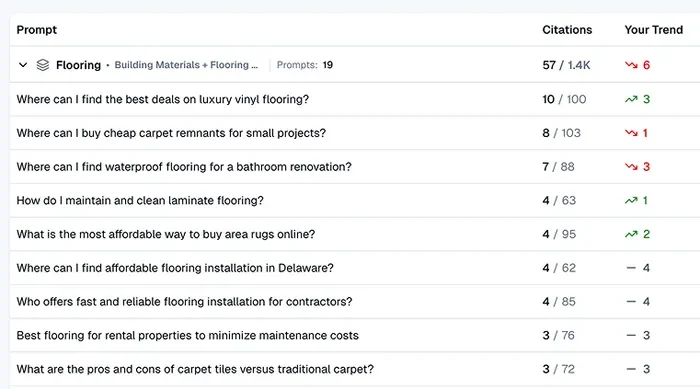
According to its pricing page, OmniSEO Essentials costs USD 89 per month on monthly billing. It includes 50 saved prompts, 5 competitors, 5 seats and four channels: ChatGPT, Perplexity, Google AI Overviews and Google AI Mode. Professional costs USD 349 per month for 100 prompts, 10 channels, 10 seats and CSV/PDF exports of up to 5,000 rows per month. Essentials shows a dash for exports. The 7-day trial needs no card but covers only ChatGPT and AI Overviews. Saved prompts are tracked queries, not search volume or site visits.
Our view: Essentials suits a small team that wants to track mentions, citations and competitors on the main Google and chat surfaces. In the demo, ask how often results refresh and whether your plan lets you export raw data.
Visit official site · OmniSEO ↗ · Affiliate link
Rank Prompt
Rank Prompt’s pricing page lists monthly plans at USD 49 (Starter, 150 credits), USD 89 (Pro, 500), USD 149 (Agency, 1,000) and USD 299 (Agency Plus, 2,000). Starter is limited to the account owner, and Agency adds white-label reports. Every plan covers six engines, including a Google surface the vendor labels AI Mode/AI Overviews. A prompt run costs 1 credit on up to three engines and 2 credits on four to six. Articles cost 10 credits each. A free option gives 10 credits for one report with no card. The 7-day free trial of paid plans includes 50 credits and requires a card.
Our view: the credit model keeps spend predictable if you size it first. The vendor’s methodology describes a share-of-answers score with editable aliases and readable raw answers. We have not tested it.
Visit official site · Rank Prompt ↗
OtterlyAI
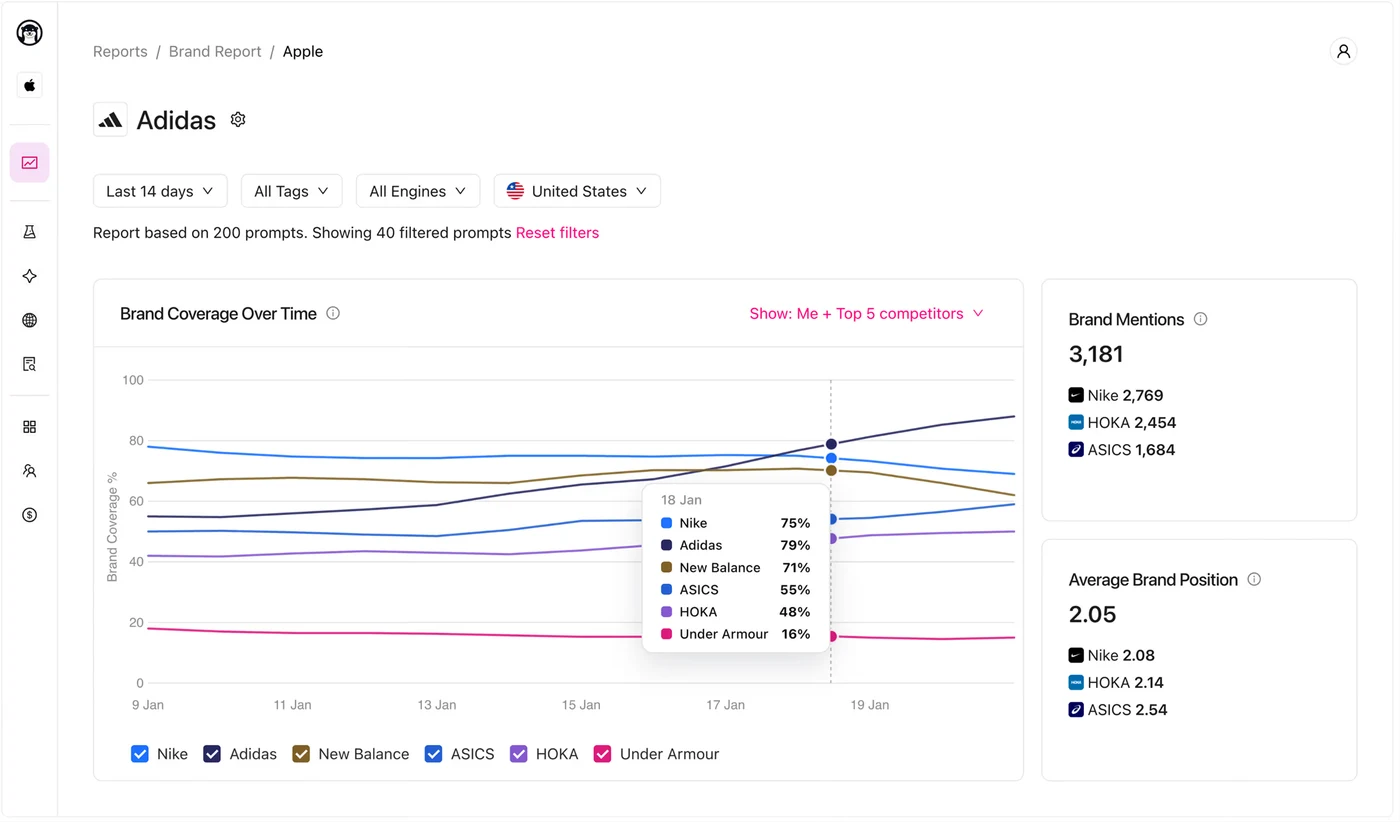
OtterlyAI is not the Otter.ai transcription app. Its pricing page lists Lite at USD 29 per month for 15 prompts, Standard at USD 189 for 100 prompts and Premium at USD 489 for 400 prompts. The four base engines are ChatGPT, Google AI Overviews, Perplexity and Microsoft Copilot. Checks run daily, with unlimited team members. On Lite, Gemini and AI Mode cost USD 9 per month each and Claude costs USD 29. API and MCP access are listed on Standard and Premium, not Lite. Reports cover mentions, sources, citations and sentiment.
Our view: Lite is a cheap way to see whether AI visibility data changes any decision before you commit a bigger budget. If you need an API or more than 15 prompts, compare Standard with the other options.
Visit official site · OtterlyAI ↗
Peec AI
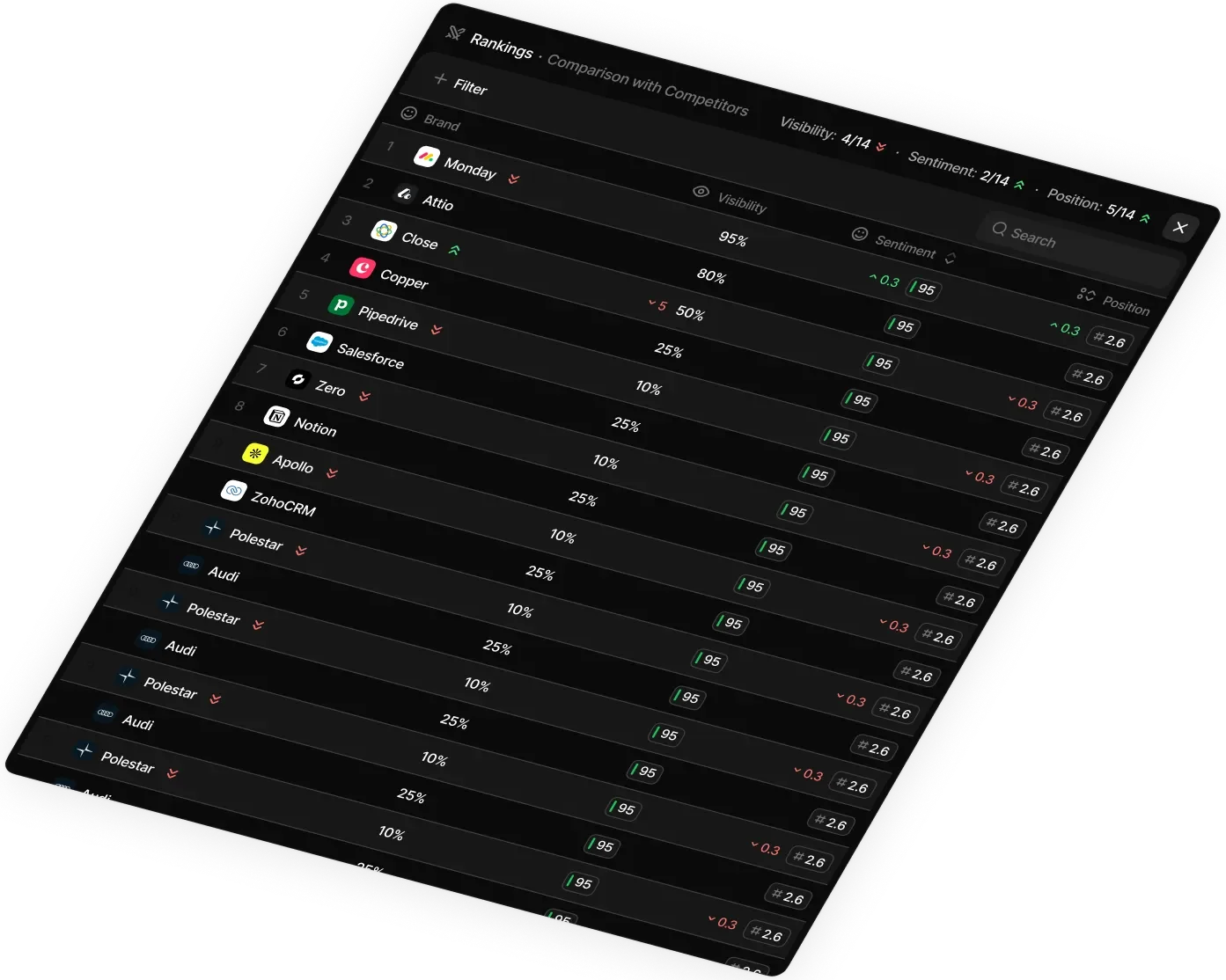
Peec AI’s pricing page, as it displayed in our browser, shows Starter at EUR 85 per month. Starter includes 50 prompts, three models of your choice, one project, daily tracking and unlimited users. Pro costs EUR 205 for 150 prompts and two projects. Advanced costs EUR 425 for 350 prompts and five projects, and it is the tier where multi-country tracking and Looker Studio are highlighted. Optional models are priced extra in the app. The product focuses on citation, source and competitor analysis.
Our view: Peec fits a marketing team that wants to see which sources shape answers in its category. Before signing, confirm which models you can select and the invoice currency. Also check whether the features you need are on Starter or only on Advanced.
Visit official site · Peec AI ↗
Profound
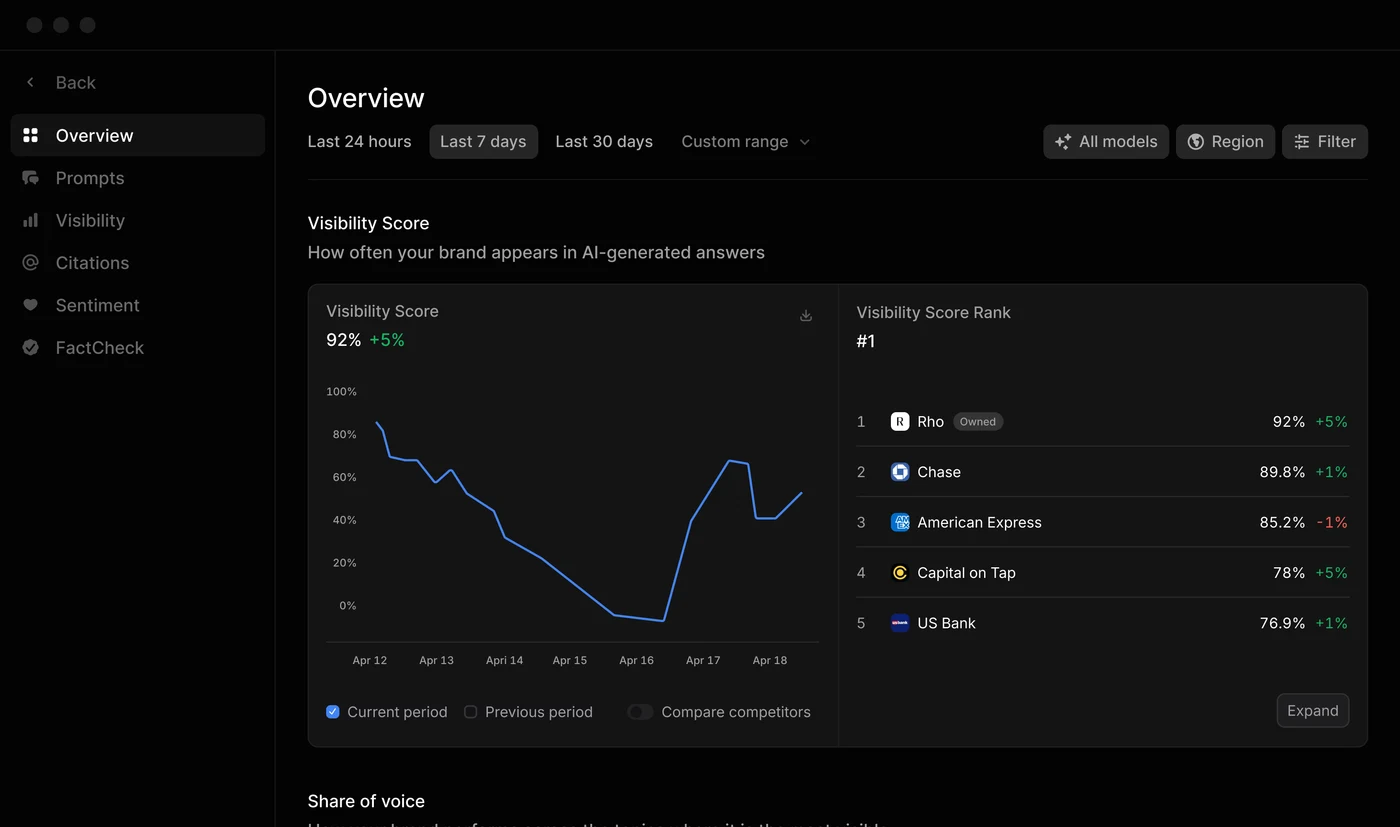
Profound’s pricing page lists one offer for brands, Enterprise, priced on a custom quote. It covers up to nine answer engines with tailored prompts and ongoing daily tracking. A free trial runs for seven days with 50 prompts a day on ChatGPT, Gemini and Google AI Overviews. During the trial, prompts are recommended by Profound and cannot be customised, and there are no exports or API access. Agents consume credits that are separate from the prompt scope.
Profound fits a team that already expects an enterprise contract and wants many engines in one place. The limit is budgeting: without a public price, you cannot compare its cost per prompt with the other tools until you have a quote. The trial shows the interface and the type of reporting, not your own prompt set, so ask for a scoped demo on your real prompts before signing.
Visit official site · Profound ↗
Promptwatch
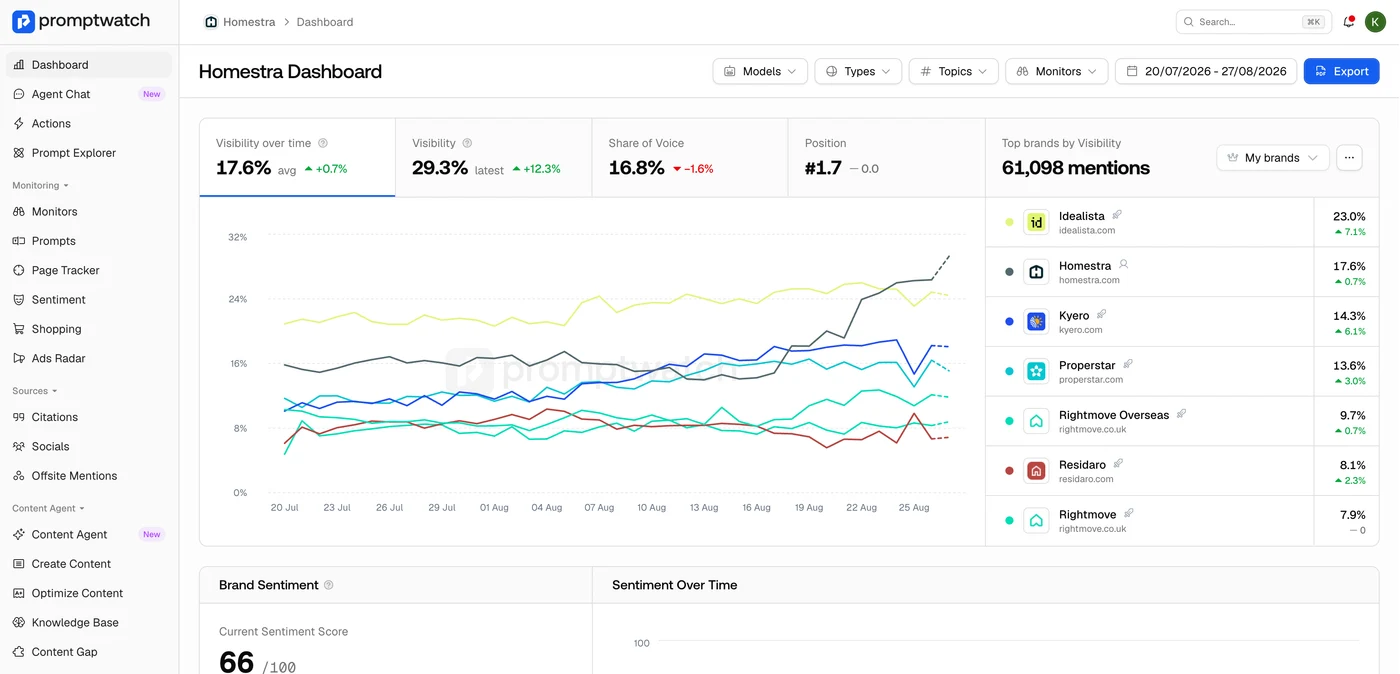
Promptwatch’s pricing page lists three monthly plans in USD. Essential costs $95 for 1 project, 50 prompts, 4 models, 6,000 responses and 500 agent credits, with no AEO articles. Professional costs $245 for 2 projects, 150 prompts, 18,000 responses, 1,500 agent credits and 5 AEO articles. Business costs $579 for 5 projects, 350 prompts, 42,000 responses, 2,500 agent credits and 10 AEO articles. All three list 4 models. Tracking is daily, with API and MCP access, and a 7-day trial is offered.
Promptwatch suits a team that wants a published price ladder and programmatic access to its data. The general FAQ mentions many models, but each paid plan card names four, so confirm which ones are included before assuming a given engine is tracked. Agent credits and AEO articles are plan extras, not visibility metrics: compare plans on prompts and projects first.
Visit official site · Promptwatch ↗
Semrush AI Visibility Toolkit
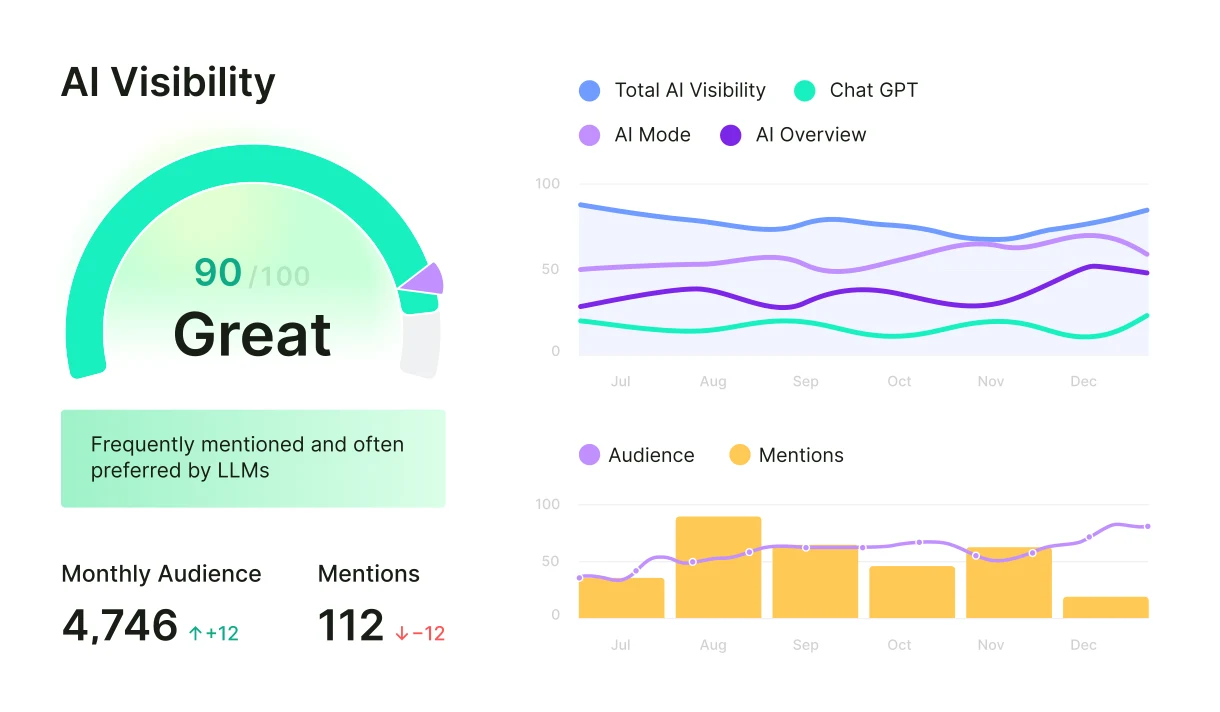
Semrush’s knowledge base lists the standalone AI Visibility Toolkit at $99 a month, with 1 project, 1 domain in Brand Performance, 25 custom prompts and an AI audit of 100 pages. Each extra block of 50 prompts costs $60 a month. Prompt Tracking covers ChatGPT and Google AI Mode; the broader AI analysis reports include other engines, so do not read one as the other. The standalone toolkit has no free trial. The 7-day trial on the AI toolkit landing page is for Semrush One, a different offer. The pricing page localises currency (we saw EUR 94.94 a month on annual billing), so confirm currency and billing at checkout.
The toolkit makes most sense for a team already in Semrush. Twenty-five prompts is a small panel. Its G2 rating covers the whole Semrush suite, not this toolkit.
Visit official site · Semrush AI Visibility Toolkit ↗
Measure four different things
A mention means the answer names your brand. A citation means the answer links to or lists a source URL, which may or may not be yours. A referral is a session that reaches your site from an AI product, and it shows up in your analytics. A conversion is a business action you define, such as a demo request or a sale. These terms are not interchangeable. An answer can mention you without citing you, and a citation does not guarantee a visit.
Always report a rate with its denominator. In a hypothetical example, 12 brand mentions in 40 recorded answers is a 30% observed mention rate for that prompt sample. It is not 30% of all buyers, and it is not market share. Keep null or error runs separate instead of counting them as zeros. Google AI Mode and AI Overviews are separate surfaces. An answer captured in a browser interface can also differ from one returned by an API. Ask each vendor for its method, date, model and market.
Calculate the real monthly cost
Prompt limits and credits cannot be compared at face value, so size your plan from your own prompt list. Take 25 prompts run weekly on four engines in Rank Prompt: 25 × 4 runs × 2 credits = 200 credits per month. Starter’s 150 credits are not enough. Pro’s 500 cover this tracking, before any article generation. Running the same 25 prompts daily for 30 days uses 1,500 credits. Agency Plus (2,000 credits) covers that, for tracking only. Plan prices are on the Rank Prompt pricing page.
OtterlyAI works differently. According to the OtterlyAI pricing page, Lite with every add-on costs USD 29 + 9 (Gemini) + 9 (AI Mode) + 29 (Claude) = USD 76 per month, excluding taxes. That buys 15 prompts on seven engines with daily checks. It does not buy 50 prompts, and the engine list differs from Rank Prompt’s.
Also count answers, because they set your review time: 25 prompts × 3 engines × 4 weekly rounds = 300 answers a month, or 600 with six engines. This figure is separate from the credit totals above.
A 30-day pilot you can repeat
The protocol below is a proposal. AI Hunter has not run it with these tools. A blank CSV template is available to log each round.
- Collect real questions. Gather 20–30 buyer questions from sales and support. Split them into branded, discovery, comparison and local prompts.
- Freeze the setup. Keep the prompt wording, market, language, engines and competitor list fixed for all 30 days so rounds stay comparable.
- Record a baseline. Before you change anything, save raw answers, cited URLs and timestamps. Then make no more than three bounded content fixes, and log each change with its date.
- Repeat weekly. Re-run the same cohort every week. Keep branded and non-branded results apart, and record null or error runs separately.
- Decide on evidence. Compare the same prompts across rounds. Check referrals and outcomes in GA4 or your CRM without assuming cause and effect. Stop or extend the pilot based on whether the data led to a concrete action, not just a higher score.
For a very small pilot, a manual log in the same template works too. It costs staff time, and each AI platform has its own usage limits, so it is neither unlimited nor effortless. If your plan allows only 15 prompts, select the 15 highest-priority questions for the first pilot.
Two of the new tools need care in a 30-day pilot. Profound’s free trial lasts 7 days, not 30, and uses recommended prompts that cannot be customised, so it cannot reproduce your own prompt set; running the full pilot on your prompts requires a paid plan. For Semrush, the 7-day trial applies to Semrush One, not to the standalone AI Visibility Toolkit, which has no free trial, so check which product you are testing before comparing results.
Download the blank tracking CSV ↓
This CSV is a blank working template with illustrative prompt ideas, not a record of tests.What the team still owns
Automation can take over the repeated work of collecting answers and building reports. People still decide which questions matter and check the facts in each answer. They also choose positioning, build relationships with publishers and approve content before it goes live. None of these tools replaces that judgment or guarantees leads. Before onboarding, ask each provider about data retention, a data processing agreement, where data is hosted and how customer data is handled. This guide does not assess legal compliance.
FAQ
What is an AI visibility tracking tool?
It is software that sends a saved list of prompts to AI answer engines on a schedule. It records whether your brand is mentioned, which sources are cited and how competitors appear. The results describe that prompt sample on the chosen engines and dates. They do not show overall search demand or website traffic.
Can I check my AI visibility for free?
Partly. Rank Prompt offers 10 free credits for one report with no card. OmniSEO has a 7-day no-card trial limited to ChatGPT and AI Overviews. You can also ask the assistants your buyer questions by hand and log the answers in our blank template. That takes time and depends on each platform’s limits.
How accurate are AI visibility tools?
Answers vary between runs, markets, languages and capture methods. A capture from the interface can also differ from an API response. Treat any score as an observation on a defined sample. Ask vendors for their method, model, date and market, and read the raw answers instead of relying on one aggregate number.
Which tool is best for a small team?
There is no universal winner. For about 15 prompts, OtterlyAI Lite is the cheapest documented entry point. For around 50 prompts on four surfaces with up to five seats, OmniSEO Essentials fits. Build your prompt list first, then compare each plan’s limits against it.
Does it matter whether a tool uses an API or the web interface?
It can. Answers returned through an API may differ from what a person sees in the product interface, including the sources and the wording. We have not verified which method each vendor uses. Ask them directly, and keep the method in mind when you compare results across tools.
Does higher AI visibility mean more website traffic?
Not necessarily. A mention may include no link, and a citation does not guarantee a click. Track referrals from AI products in GA4 and business outcomes in your CRM, and keep the two separate. Avoid crediting a change to visibility alone without looking at other factors.
How many prompts do I need to track?
Start with 20–30 real buyer questions from sales and support. Group them into branded, discovery, comparison and local prompts. Then multiply by engines and runs to estimate credits or answers. For example, 25 prompts on three engines over four weekly rounds produce 300 answers to review.
Can AI visibility tracking run fully on autopilot?
Collecting answers and building reports can be automated. People still need to choose the questions, check the facts in answers and decide positioning. They also build relationships with publishers and approve content before it goes live. Treat the tool as a way to measure, not as a self-running marketing system.
Keep building your search strategy
Compare tools for your next step.

Best AI SEO Tools 2026: Surfer, Frase, Jasper and OmniSEO Compared
Compare Surfer SEO, Frase, Jasper and OmniSEO in 2026: what each does, verified monthly and annual prices, limits, and how to test value before you commit.
Read the guide
Best AI Tools for Content Creators in 2026: Castmagic vs Descript vs ElevenLabs vs Argil
Castmagic, Descript, ElevenLabs, Argil and Jasper compared: the best AI tools for content creators in 2026 covering podcast, video, voice, writing and shorts.
Read the guide
Best AI Marketing Automation Platforms in 2026
ActiveCampaign vs Brevo vs GetResponse: comparing the best AI marketing automation platforms in 2026. Features, pricing and recommendations for B2B and B2C.
Read the guideTools in this guide
Find the best AI tool
215 tools listed with features and pricing. Find the one that fits your needs.