
AI testing platforms promise to write, run and repair end-to-end tests, yet the right choice depends on who will own those tests after launch. This guide compares four options for SaaS and product teams, using vendor pages checked on 19 October 2026, then turns that into a budget and pilot plan.
The short version
Four AI testing platforms compared
 QA Wolf
- Best for
- Engineers who want portable tests, with optional human help
- Published pricing
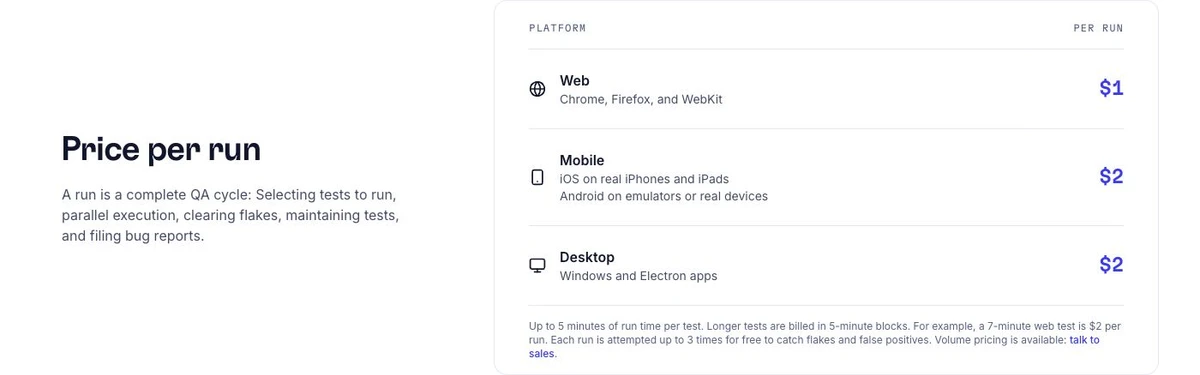
- $1 per web test run; $2 per mobile or desktop run
- Scope
- Web on Chrome, Firefox and WebKit, plus mobile and desktop
- Check before buying
- Cost grows with runs, duration and platforms; set a spend cap
 mabl
- Best for
- QA teams wanting web, API and quality checks in one place
- Published pricing
- Quote-based; 14-day trial
- Scope
- Web, API, accessibility and performance; native mobile listed as an add-on
- Check before buying
- Credit cost and mobile extras need a written quote
 testRigor
- Best for
- Manual QA teams authoring readable test steps
- Published pricing
- Free public plan; Private Complete 14-day trial; Enterprise on quote
- Scope
- Web, native and hybrid mobile, API; Windows desktop on paid plans
- Check before buying
- The free plan makes every test and result public
 Testsigma
- Best for
- QA teams reusing plain-language flows across several apps
- Published pricing
- Pro and Enterprise on custom quote
- Scope
- Web, mobile, API and Salesforce; pricing selector is product-specific
- Check before buying
- Agent availability and platform scope per tier
QA Wolf
QA Wolf: portable tests, paid per run
The platform maps your app, creates, runs, diagnoses and maintains tests, attaching videos and traces to bug reports. Tests export as Playwright or Appium code, you can bring your own Playwright suite, and the pricing page documents MCP access for Codex, Claude Code and Cursor.
Runs are billed in five-minute blocks, and up to three attempts count as one run, timed by the longest. AI use and seats are unlimited. JumpStart writes tests then hands off; Coverage-as-a-Service, which also runs and maintains them, is quoted separately.
mabl
mabl: one platform for an established QA practice
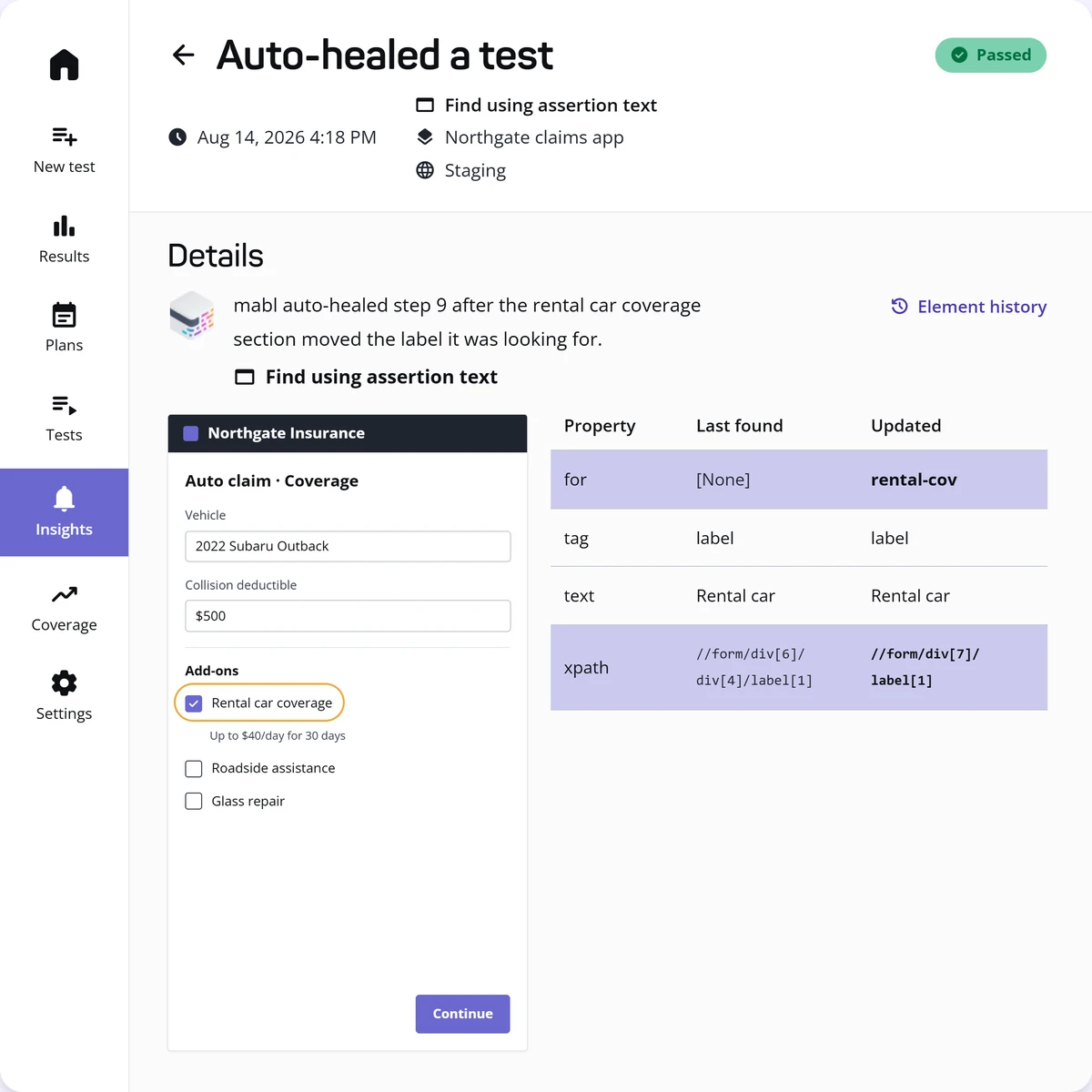
mabl organizes work as build, validate, investigate and release, with screenshot diagnostics, advanced auto-healing, visual assertions and data-driven tests. The pricing page lists CI, Jira, Slack, Teams and CLI integrations, which helps a QA team keep evidence close to existing workflows.
Cloud credits start at 500 per month; local and CI runs are unlimited, but unlimited cloud concurrency is not unlimited cloud usage. Unlimited applies to Participant licenses, not every license type. Native mobile sits among add-ons, so confirm platforms in the quote.
testRigor
testRigor: plain-English tests for manual testers
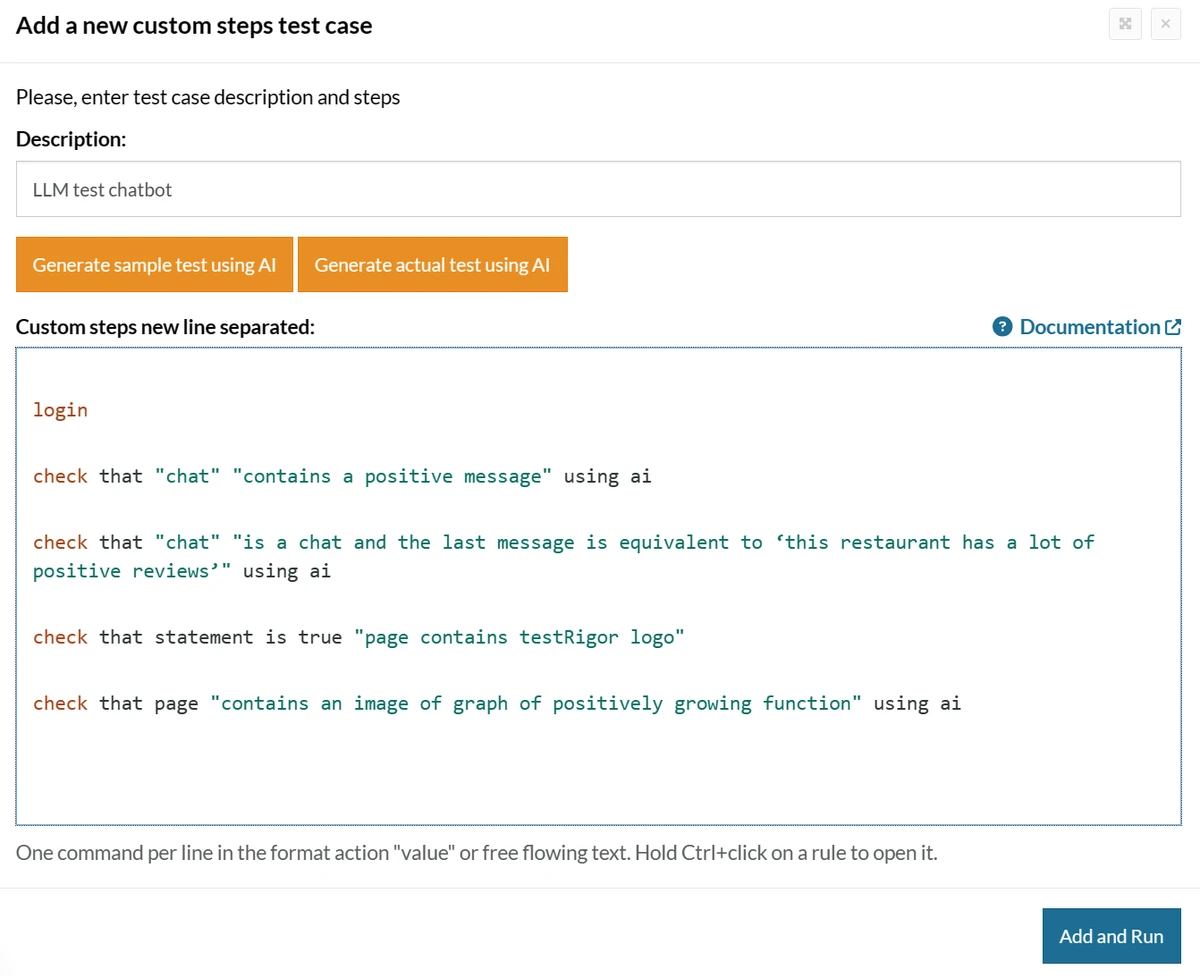
Tests are written as plain-English commands, and generated steps can be reviewed and refined by your team. Coverage spans cross-browser web, native and hybrid mobile, API, email, SMS and 2FA flows; the homepage also documents MCP and Skills for generation in Claude Code.
We found no published price for the private plan, so ask for a quote that states parallel capacity. Broader device coverage runs through BrowserStack or LambdaTest, not all included free. Check command coverage, test data handling, privacy and export format.
Testsigma
Testsigma: governed plain-language flows across apps
Pro lists unlimited automated minutes and apps, parallel execution, auto-healing and integrations. Enterprise lists SSO, private or on-premises cloud and accessibility testing. The pricing selector is product-specific, so do not assume unlimited concurrency or real devices on every tier.
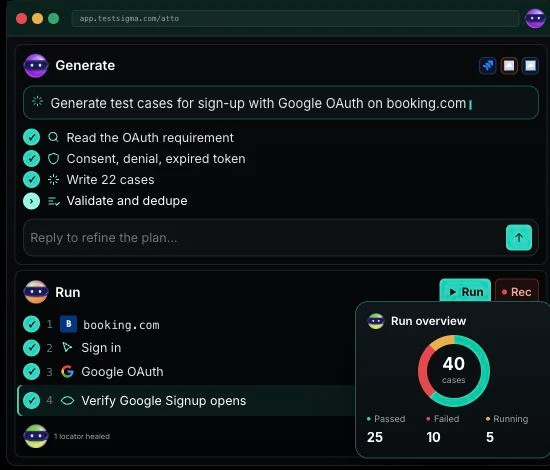
The homepage advertises AI agents that generate, run, heal and diagnose tests for web, mobile, API and Salesforce, while the pricing page still labels Autonomous Testing as upcoming. Ask for a demonstration showing which agents your tier actually includes.
Choose by who will own the tests
End-to-end (E2E) tests follow a complete user journey, CI runs automated checks after each change, and self-healing should adapt a locator, never a business rule.
- Developers who want portable code should favor exportable Playwright or Appium tests that live in the repository and run in the same CI pipeline as the product.
- Manual QA testers usually move fastest with plain-language steps they can read, review and correct without asking an engineer to translate every change.
- A managed service adds capacity when nobody has time to write tests, but a business owner should still define acceptance criteria with developers and approve each release.
Build a comparable run budget
Price one identical workload with every vendor before comparing quotes.
- Example: 20 critical web tests, run twice a day over 22 working days, equals 880 test runs a month. At QA Wolf’s web rate, with each run under five minutes, that is 880 USD before tax or volume pricing.
- Run the same suite on three browser engines and it becomes 2,640 runs, or 2,640 USD on the same assumptions. Manual reruns are extra cycles, while included retries are not billed again.
- Send that workload to the other vendors and ask each quote to state platforms, retention, parallelism, people involved and the debugging time you still carry. A per-run price is never the cost of a whole suite.
Run a 10-journey pilot
Use this pilot to compare two shortlisted platforms on the same workflows and acceptance criteria.
- Pick ten real journeys: signup, login, forgot password, search, a form, checkout, refund or cancellation, permissions, file upload and email. Use a test environment, synthetic accounts and payment test mode.
- Write business assertions, for example an expired coupon must be rejected and an unauthorized user cannot see another account. Then introduce a known bug and confirm the test fails instead of healing around it.
- Change a harmless label and review the healing log, repeat unchanged runs 20 times to count false alerts, and record triage time, cost and latency. Keep a manual release gate throughout.
Where ChatGPT, Claude and coding agents fit
General assistants and testing platforms do different jobs.
- ChatGPT and Claude can help draft acceptance criteria and edge cases. Codex and Claude Code support test-code work. Your team can keep its own testing framework and CI, or use a specialist platform for shared execution, diagnostics and maintenance.
- QA Wolf officially documents MCP access, and testRigor officially documents MCP and Skills for Claude Code. Treat these as connection points, not proof that one assistant produces better tests.
- Automation frees people for customer research, product judgment, exploratory testing and business decisions. It does not make QA effortless or replace the people who decide what quality means.
FAQ
Which AI tool is best for software testing?
It depends on who owns the tests. QA Wolf suits engineers wanting portable code, testRigor and Testsigma suit plain-language authoring, and mabl suits teams wanting a broader platform.
Will QA testers be replaced by AI?
Nothing we verified supports that. These tools automate authoring, runs and maintenance, but people still define acceptance, explore the product, judge risk and approve each release.
Can I use a free plan for private testing?
testRigor’s free plan makes all tests and results public, so it is unsuitable for private business flows. Use the Private Complete trial or a quoted plan for confidential work.
What does an AI testing tool really cost?
Multiply tests, daily runs, workdays and platforms, then add reruns, people and debugging time. Ask each vendor to quote that identical workload rather than comparing headline prices.
Can self-healing hide real bugs?
A repair can hide a defect if it changes the expected outcome. Keep business assertions under review, introduce a known failure during the pilot and inspect the repair history.
Do Codex or Claude Code replace these platforms?
Not necessarily. A team can maintain its own test framework and CI with coding-agent assistance. Compare that engineering effort with a specialist platform’s execution infrastructure, reporting and maintenance services.
Is mobile testing the same as mobile web?
No. Mobile web runs in a phone browser, while native mobile tests an installed app. Check that native mobile is in your quote, since some vendors list it as an add-on.
How should we start a pilot?
Choose ten critical journeys in a test environment with synthetic accounts, write business assertions, plant a known bug, measure false alerts over repeated runs and keep manual release approval.
Sources · 19/10/2026
Sources: official QA Wolf, mabl, testRigor and Testsigma pages, plus G2 ratings, all checked on 19 October 2026. Plans and prices can change.
Related guides
More comparisons for teams choosing AI tools for product work.
 Best AI No-Code Automation Tools in 2026: Make vs Zapier vs n8n vs ActivepiecesRead the guide →
 Best AI Agents in 2026: OpenClaw vs Claude Code vs Lindy vs Relevance AIRead the guide →
 Best AI Productivity Tools in 2026: ClickUp vs Notion AI vs Motion vs Reclaim.aiRead the guide →
Protect the inboxes your workflows rely on: compare AI email security for small businesses, including licensing and false-positive handling.
Find the best AI tool
215 tools listed with features and pricing. Find the one that fits your needs.